Drain Field Replacement in Chattanooga, TN
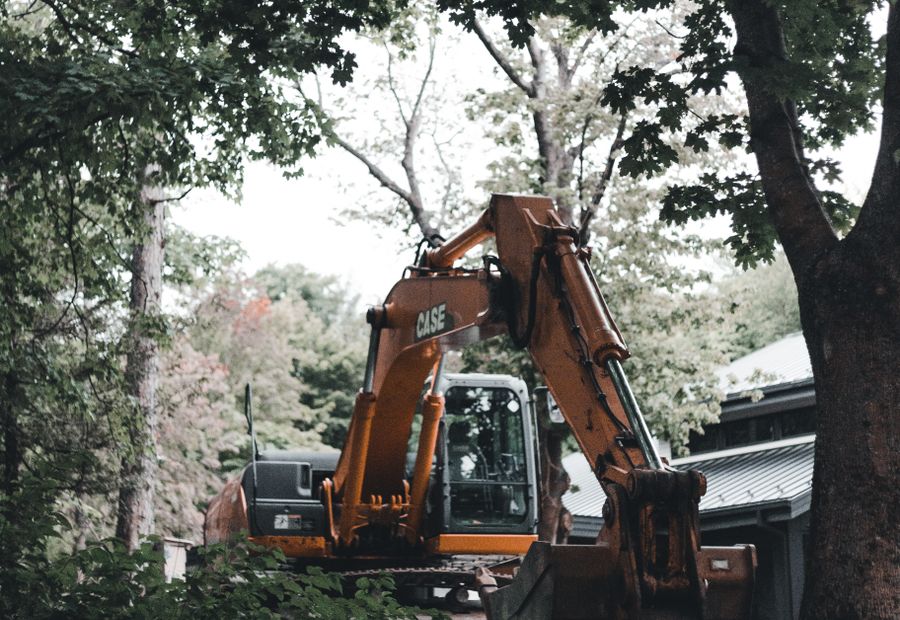
Chattanooga Drain Field Pros is a drain field replacement contractor doing failed field replacement, drain field repair, complete septic installation, tank and baffle replacement, mound and alternative systems, soil testing and design, and commercial septic work. We serve houses, acreages, cabins, and small business property across Chattanooga, Ooltewah, Soddy-Daisy, Apison, Harrison, Sale Creek, and Hamilton County, Tennessee.
We replace fields with Infiltrator Quick4 chambers set on a level trench bottom, where the open arch itself is the infiltrative surface and no stone carries fines into the soil face. Where stone suits the site, perforated pipe goes in washed drainage stone with non-woven fabric over the top to hold soil out of it. A precast concrete tank with an effluent filter in the outlet tee sits ahead of either one. What sizes the field is the soil evaluation, and what levels it is a laser rather than an eye. Compare that with trenches cut to whatever depth the bucket reached, on a bottom running downhill, with nothing filtering what leaves the tank.
What Actually Sealed Your Trench
Biomat. A dark slimy layer grows at the soil face of every trench that works, and a thin one is doing the treatment by slowing water down. Years of loading thicken it, and years of solids thicken it faster. Past a point it seals. The trench then accepts nothing, and liquid that cannot go down goes up. Your wet spot is that liquid arriving at the surface.
Tank Versus Field
These are two machines doing two jobs. One settles the solids out and traps the grease. The other hands liquid to unsaturated soil, and soil does the treatment. Emptying the tank changes the tank. It leaves the field exactly as it was. That is the whole reason a pumping buys three weeks and then the problem walks back in.
Soil First, Then a Number
How fast your ground accepts water sets how much trench you need. How deep clean soil runs before it hits rock or seasonal water sets whether trenches are possible at all. In this county that answer changes between a valley bottom and a ridge slope, and sometimes inside one parcel. Two neighbors get two systems at two prices.
Reserve Area or Redesign
Most permitted lots carry a piece of ground held back for the second field. Intact, unbuilt on, and still passing, that ground takes new trenches and new distribution, and the old field is abandoned in place. No usable reserve, or a lot that fails fresh evaluation, and the job turns into a mound, an at-grade, pressure distribution, or advanced treatment ahead of a smaller field. We tell you which fork you are on before anything is priced.
Permits and Booking
Hamilton County administers its own septic permit program under the state standards, and a site and soil evaluation comes with the application. We submit it. Nobody promises an approval or a date. One boundary: we do the digging and your pumper does the pumping, so a routine cleanout wants a pump truck. (423) 555-0125 reaches a person.
How much does it cost to replace a drain field?
Your lot decides which of two jobs it is, and the gap between them is large. New trenches in a reserve area that still passes evaluation is the ordinary version. A lot with no usable reserve ground, or one that fails a fresh evaluation, becomes a redesign with a mound, pressure distribution, or advanced treatment, and that carries pumps, controls, and imported material. Inside either case the movers are the soil result, depth to rock or seasonal water, the field size your bedroom count calls for, what a machine has to cross to reach the work, and haulage. The evaluation comes first because the ground sets the size.
Why does my septic back up right after a pumping?
The pump truck emptied your tank and never touched the field. An empty tank hands the house a few weeks of borrowed room, and when it refills to the outlet the field has to take water again. A backup returning that fast says it will not. The usual reasons are a sealed soil face, laterals crushed or plugged with root, a distribution box that has settled out of level, or more water going in each day than your ground can move.
What are the signs that a field needs replacing?
Start outside. Soggy ground or standing water over the trenches, a stripe of grass darker and taller than the rest of the lawn, and a smell in the yard on a still day are the outdoor signs. Inside you see slow drains through the whole house, gurgling, and a backup at the lowest fixture. An alarm sounding means a pump or a level problem. Indoor symptoms alone, over dry ground, usually point at a clog between the house and the tank instead.
What does the yard look like afterward?
Torn up, then repaired. Trenching leaves lines of spoil, and the machine leaves tracks between the road and the work. We backfill, shape the grade to shed surface water away from the new field, then seed and straw. Grass comes back over a season. The old field gets abandoned in place, and the new ground over the trenches stays off limits to vehicles, trailers, and anything you might be tempted to build there.