Chattanooga Drain Field Pros: Drain Field Replacement in Chattanooga, TN
Chattanooga Drain Field Pros is a septic system contractor licensed and insured in Tennessee, working unsewered lots across Hamilton County. Our work covers failed drain field replacement, field repair, whole system installation, tank and baffle replacement, mounds and other alternative designs, soil testing with system design, septic line repair, and commercial septic. Our customers own houses on ridge lots and valley acreage, new construction outside the sewer line, shops, churches, and campgrounds in Hamilton and Meigs counties.
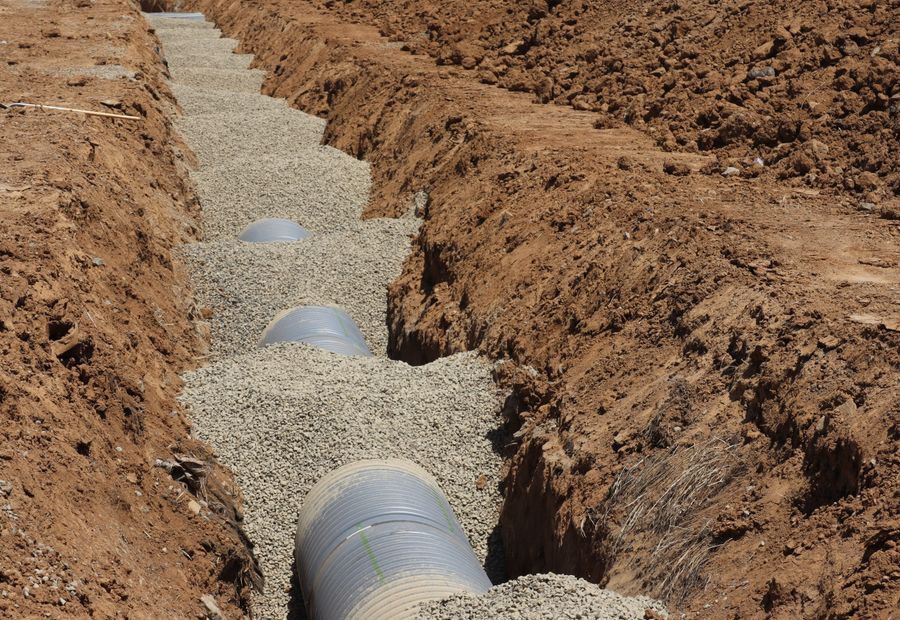
We set Infiltrator Quick4 chambers straight on a level trench bottom, or we bed perforated pipe in washed drainage stone under non-woven fabric where stone suits the site. A precast concrete tank with an effluent filter in the outlet tee sits ahead of the field, so solids stay in the tank instead of reaching the soil. The size of the field comes off a soil evaluation. Compare that with a field dropped in at whatever depth the bucket reached, on a bottom that runs downhill, with nothing filtering what leaves the tank. The soil does the treatment here. The pipe only spreads the water out.
Call for a Free Estimate- Licensed and insured in TN
- Soil evaluation before any number
- Infiltrator chambers, EZflow, or stone and pipe
- Permit pulled before a machine moves
- Hamilton and Meigs counties
Drain Field Replacement
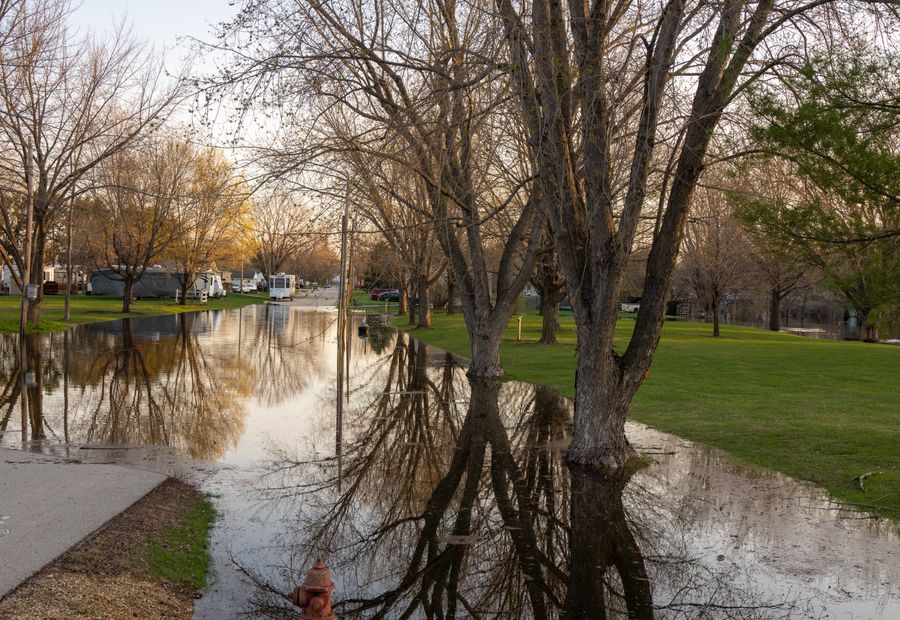
A field fails when the soil stops taking water. A dark greasy layer builds where effluent meets the trench wall, and that layer is bacteria. Thin, it treats the water. Thick, it seals the trench shut. The liquid then has nowhere down to go, so it comes up. That is the soggy patch, the tall green stripe, and the backup at your lowest drain.
Replacement goes one of two ways, and the two prices are nothing alike. New trenches in an intact reserve area is the straightforward one. A lot with no usable reserve ground turns into a redesign. More on drain field replacement.
Drain Field Repair
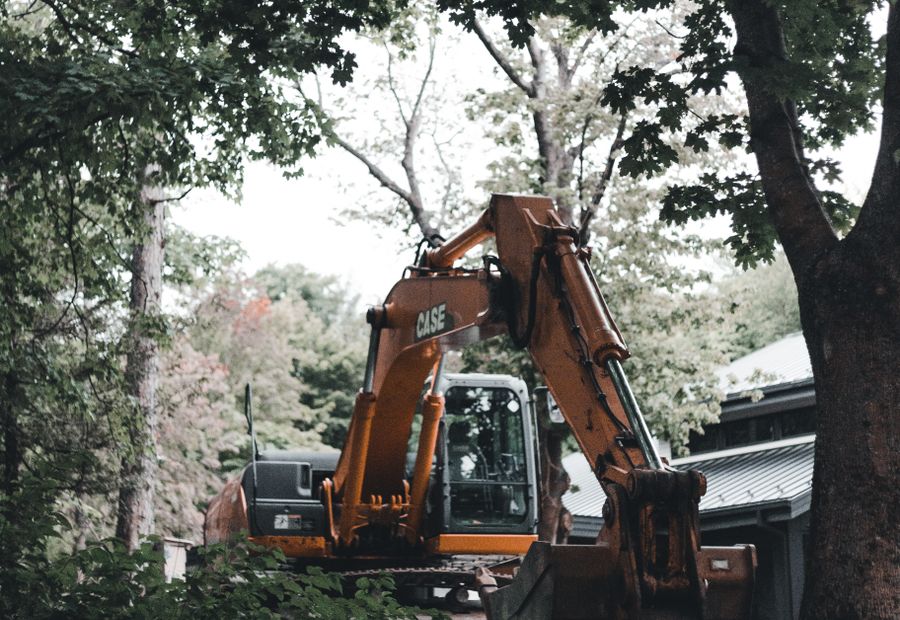
Plenty of failures are repairs. A lateral crushed under a truck track. Roots inside a distribution line. A distribution box that settled out of level and now drowns one trench while the rest sit dry. A pump that will not run, a float hung up, a filter packed solid. Any of those can be fixed for a fraction of a replacement.
Some are not repairs. A field whose soil interface has sealed gets replaced. Nothing poured down a toilet reopens sealed soil. More on drain field repair.
Septic System Installation
Hamilton County keeps adding houses past the end of the sewer line, and every one of them needs a system. The sequence never changes. Soil work first, then a design that matches what the soil said, then the permit, then the dig, then the inspection before anything gets covered.
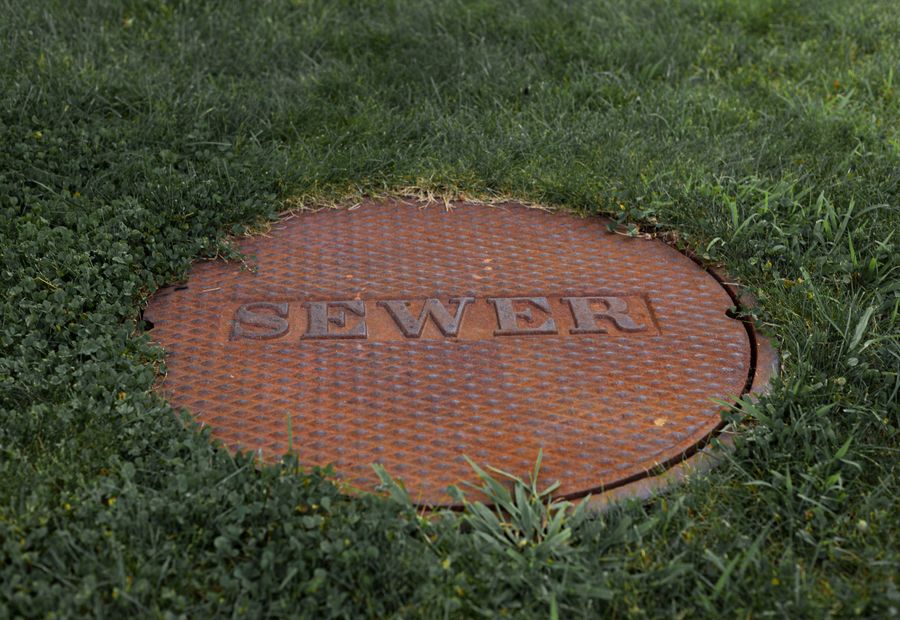
Tank capacity follows bedroom count. Trench layout follows the contour of your actual ground. We finish with risers and lids at grade so nobody digs to service the tank later. More on septic system installation.
Septic Tank Replacement
A corroded concrete lid is a safety problem first and a plumbing problem second. Somebody can go through one. Past the lid, the parts that matter are the baffles and the filter. Baffles hold the scum layer back from the outlet. A filter catches what slips past. Lose both and the tank starts feeding solids to your field.
We set precast concrete where a truck can reach and Infiltrator IM-series poly tanks where it cannot. This is the one job where we pump, because a tank comes down empty before it comes out. More on septic tank replacement.
Mound and Alternative Systems
Some ground will not take a conventional trench field. Rock too close to the surface, water sitting high in a wet season, or clay that will barely accept water at all. A mound answers that by bringing the soil to the site. Imported washed sand builds a field above natural grade, and a pump doses it.
At-grade systems are the lower profile version. An aerobic treatment unit is another route, and it trades power and scheduled service for cleaner effluent and a smaller field. Read the mound and alternative systems page.

Soil Testing and System Design
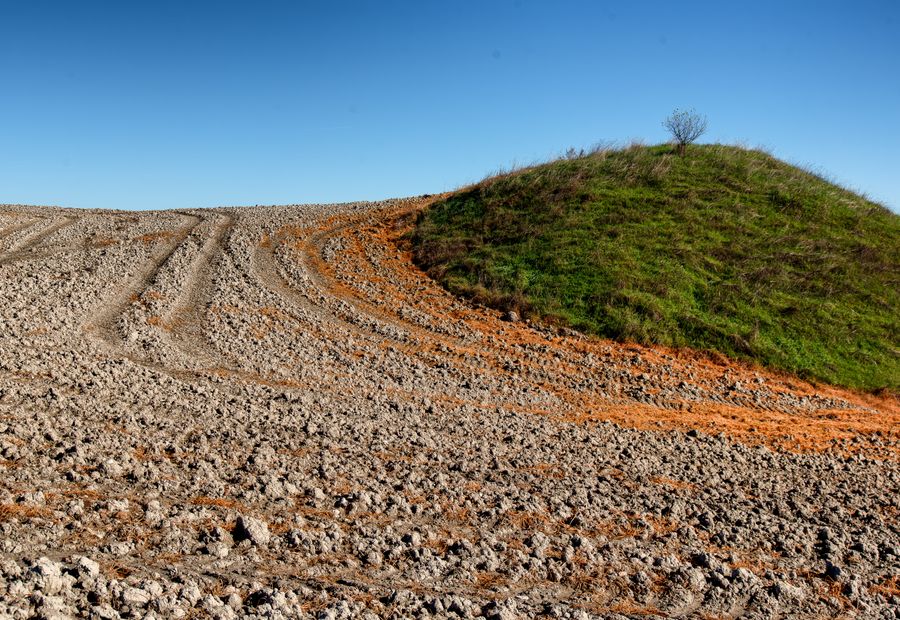
A percolation test clocks the drop of water in a hole. A soil evaluation reads the ground itself in a pit or a boring. Somebody logs the horizons, the texture, the color, the mottling that marks where water sits in a wet season, and the depth to rock. Tennessee leaned toward the evaluation for a good reason. A perc rate on its own can pass a spot with a rock shelf under it.
Buying land here? Test before you close. Read the soil testing and design page.
Septic Line and Baffle Repairs
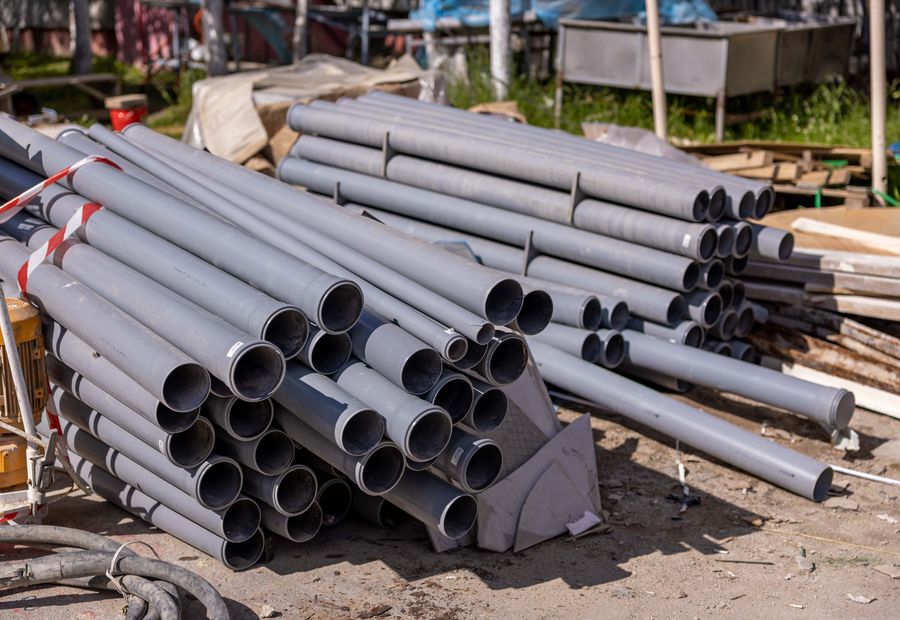
Three separate runs of pipe carry your wastewater. House to tank. Tank to distribution box. Box out to each trench. Every one of them fails differently. The house line bellies where fill settled under it. The outlet line crushes where a driveway crossed it. The laterals plug with roots.
Inside the tank, a broken inlet baffle drops solids straight down the middle and a missing outlet baffle sends grease to the field. Read the line and baffle repair page.
Commercial Septic
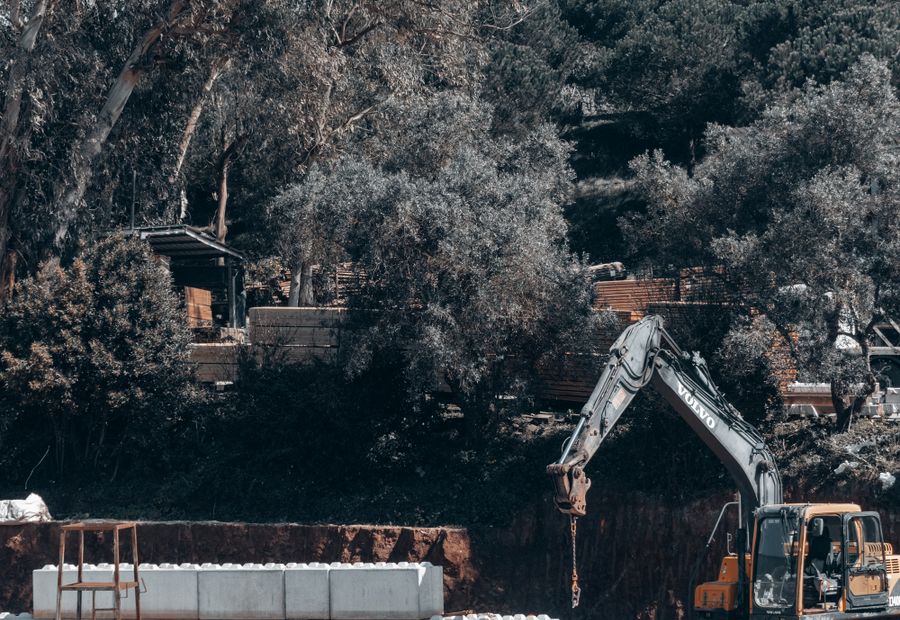
A restaurant, a church, a campground, a cabin resort, a shop out on the highway. None of these size by bedroom count. They size by measured flow, and the field grows with it. A kitchen adds a grease interceptor ahead of the tank, because grease will take a commercial field out faster than anything else on the property.
We work to an engineer's design and we phase the job so the doors stay open. More on commercial septic systems.
Why Hamilton County Homeowners Call Us
- We tell you whether it is the tank or the field. Wet ground and smell outside, plus a backup that came right back after a pumping, points at the field. Dry ground outside and one slow fixture points somewhere else. Start with drain field replacement.
- The soil decides the price, so the soil work comes first. How fast your ground accepts water sets the field size. How deep it runs before rock sets whether a trench field is possible at all. Two neighbors on one road get two different systems. Head to soil testing and system design.
- A level trench bottom is not a detail. A bottom that falls sends every gallon to the low end. That end seals early while the rest of the field never does any work. See septic system installation.
- An effluent filter costs less than a field. It sits in the tank outlet and catches the solids that would otherwise land in your trenches. Solids kill a field young. See septic tank replacement.
- We say when a repair will hold and when it will not. Crushed laterals, a settled distribution box, a stuck float, and too much water going in are all fixable. Sealed soil is not. See drain field repair.
- Permits come first, every time. Hamilton County runs its own groundwater protection program under the state standards, and a site and soil evaluation comes with the application. We confirm what your parcel needs and we pull the permit.
Why Drain Fields Fail
Symptom lists are easy to find. What almost nobody writes down is the thing happening under your grass that produced them. Here it is.
The Soil Is the Working Part
Your system has two halves doing two jobs. Solids drop out in the tank, and grease stays there too. The liquid that leaves goes to the field, and the field hands that liquid to unsaturated soil. Soil treats it on the way down. The pipe distributes and nothing else. Every question about size, cost, and whether the job is even possible traces back to that one fact.
Biomat, the Normal Ending
A slime layer forms at the soil face of every working trench. It is alive, and a thin one is doing its job by slowing the water enough for treatment. Years of solids and years of loading thicken it. Past a point it seals, and a sealed trench accepts nothing. The water goes up because down is closed.
Why the Pumping Did Not Hold
By the time we get the call, a pump truck has usually already been out. The backup cleared for two or three weeks and then returned. That sequence is not a coincidence. Pumping empties the tank, so the house gets a tankful of borrowed room. It changes nothing in the field. When the tank refills to its working level, the field has to take water again, and it still cannot.
Too Much Water Going In
Hydraulic overload takes out fields that were built correctly. A house sized for three bedrooms picks up six people. Laundry runs back to back all Saturday. A toilet has been running behind a closed door since March. A sump pump discharges over the trenches, or a downspout dumps on them. Soil needs to drain between doses. Keep it saturated and it quits accepting water while looking perfectly fine from the surface.
Weight and Roots
Distribution pipe and chambers sit shallow. A pickup, a camper, a skid steer, a load of fill, or a new gravel drive crushes the pipe and compacts the ground beneath it. Compacted soil does not loosen back up. Roots are the other one. Willows, poplars, and silver maples grow toward water, and the wettest ground on your property is your field. They pack a lateral solid, then push it out of grade.
What Additives Do
They do not reopen sealed soil pores. They do not un-compact ground a truck drove over, and they do not lower a water table. That is physics, not opinion. Anyone facing a five figure number gets sold hope in a bottle, and we would rather write the true version and let you decide.
The Four Causes of an Early Failure
Always the same four. A field sized without real soil work behind it. Trench bottoms that are not level, so one end takes all the water. A tank with no effluent filter, passing solids to the soil. Anything driven over or built on top of the field afterward. A field that avoided all four runs decades.
A Note on Pumping and Plumbing
We dig and your pumper pumps, so call a pump truck for a routine tank cleanout. And if a toilet backs up while the ground outside stays dry and the alarm stays quiet, that is a clog between the fixture and the tank. A plumber clears those every day.
How a Drain Field Job Runs
Look at the Site
We open the tank and read the level. We walk the wet ground, find the trenches, and ask what the house sends through the system. Then we look for reserve area with nothing built on it.
Soil Work
A pit or a boring gets logged for texture, layering, wetness, and depth to rock. That result sizes the field and decides whether trenches go in the ground or the site needs a mound.
Design and Permit
The design follows the soil report. Hamilton County Development Services runs the groundwater protection program that permits the work. We submit and we wait for the approval before anyone digs.
Dig and Set
Trenches get cut to a level bottom. Chambers or stone and pipe go in. The distribution box gets set true so each trench takes its share. Then the inspection happens before cover.
Backfill and Seed
Cover goes back on, the grade gets shaped to shed surface water away from the field, and the ground gets seeded and strawed. The old field gets abandoned properly.
What Moves the Price of a Drain Field
Nobody can quote a field over the phone, and any site that prints one number for your county is guessing. The version is a fork with two very different answers on the other side of it.
The first branch is a reserve area that still works. Most permitted lots carry a piece of ground held back for the second field. When that ground is intact, nothing got built on it, and it still passes evaluation, replacement means new trenches over there, new distribution to reach them, and the old field abandoned in place. That is the ordinary job.
The second branch is a redesign. Sometimes there is no reserve area on the plat. Sometimes a shop or a pool went up on it. Sometimes the whole lot fails a fresh evaluation because the rock is closer than anyone thought. Then the answer is a mound, an at-grade, pressure distribution, or advanced treatment ahead of a smaller field. Pumps, controls, and imported sand all carry cost that trenches do not.
Inside either branch, these move the number:
- What the soil evaluation says your ground will accept
- Depth to rock or to the seasonal high water table
- Field size, which follows the bedroom count of the house
- Whether a machine can reach the work, and what it has to cross
- How much material gets hauled in and how much spoil goes out
- Whether the design needs a pump, floats, and a control panel
- Trees, outbuildings, and drives that have to be worked around
This is why the evaluation comes before the number rather than after it. A quote written before anyone reads the soil is a guess wearing a letterhead.
Frequently Asked Questions
How much does it cost to replace a drain field?
It depends on which of two jobs your lot turns out to be. New trenches in a reserve area that still passes is one price. A lot that has to be redesigned as a mound or an advanced system is a far larger one. What moves it inside either case: the soil result, depth to rock or water, field size for the house, machine access, haulage in and out, and whether a pump and controls are needed. The evaluation comes before the number, because the soil is what sets the size.
How long does a drain field last?
A field on good soil, treated well, runs decades. What decides it is not the brand of pipe. It is whether the tank got pumped on a schedule so solids never reached the trenches, whether a filter sat in the tank outlet, whether anything got driven or built over the field, and how much water the house pushes through it. A tank nobody ever pumped can end a field in well under half the life it should have had.
Can a failed drain field be repaired?
Some failures, yes. A crushed or root plugged lateral, a distribution box that settled out of level, a pump or float that quit, a filter packed with solids, or too much water arriving from a running toilet or a downspout are all repairs. A field whose soil face has sealed is a different animal. That one gets replaced, not restored. No product poured into a drain reopens soil that has sealed.
Do I need a permit to replace a drain field in Hamilton County?
Yes. Tennessee regulates subsurface sewage systems at the state level, and Hamilton County administers its own delegated permit program under the state standards through Development Services and its groundwater protection division. A site and soil evaluation comes with the application. Requirements differ from one county to the next, so your contractor confirms what your parcel needs and pulls the permit before a machine touches the ground.
What is a perc test and do I need one?
A percolation test times how fast water drops in a hole dug in your ground. The more useful test is a soil evaluation, where a certified soil scientist reads the soil profile in a pit or boring for texture, layering, wetness, and depth to rock. Tennessee accepts either route depending on the situation, and a proposed subdivision needs the soil scientist. The health authority sets which one your site takes, and the result sizes the system.
Why does my septic back up after I just had it pumped?
Because the pumping emptied the tank and did nothing to the field. An empty tank buys the house two or three weeks of room. Once the tank fills back to its outlet, the field has to accept water again, and a backup returning that quickly says it cannot. Causes run short: a sealed soil interface, crushed or root plugged laterals, a distribution box out of level, or simply more water going in than the ground takes.
What are the signs of a failing drain field?
Look outside first, because the outdoor signs are what separate a field failure from a plumber's clog. Soggy ground or standing water above the trenches. A stripe of grass darker and taller than the rest of the lawn. A smell in the yard on a still day. Indoors you get slow drains through the whole house, gurgling, and a backup at the lowest drain, plus the tank alarm if you have a pump. Indoor symptoms with dry ground outside usually mean a clog in the house.
Can I build or park over a drain field?
No. Weight crushes shallow pipe, and it compacts the soil that is supposed to be accepting your wastewater. Compacted soil does not recover. That rules out vehicles, trailers, campers, sheds, fill piles, patios, and new driveways over the trenches. Keep the reserve area clear too. It is the ground your next field has to go in, and a shop built on it turns an ordinary replacement into a redesign.
How do I know if it is the tank or the drain field?
Wet ground, smell in the yard, and a backup that came back soon after a pumping all point at the field. A backup with dry ground outside, no alarm, and one fixture affected points at a line or an interior clog instead. The real answer comes from opening the tank and reading the liquid level against the outlet. That is what the site visit is for, and it costs you nothing.
What can I do while the permit runs?
Cut water use hard. Space the laundry out over the week, fix any toilet that runs, keep showers short, and send sump and downspout water somewhere other than the field. Then have the tank pumped to buy room. None of that repairs anything, and we will not pretend otherwise. It keeps sewage out of the house while the evaluation, the design, and the permit run their course.
Do you dig year round in Chattanooga?
Close to it. Cold does not stop work here the way it does further north. Water does. Saturated ground will move a start date, because a machine working wet clay smears the trench walls and a smeared wall accepts less water than an open one. Spring is our busy season, since a wet stretch is exactly what pushes a marginal field over the edge.
Do you pump septic tanks?
We do the digging, and your pumper does the pumping, so call a pump truck for a routine cleanout. The one exception is a tank replacement, where the tank comes down to empty before it comes out of the ground. If your issue is a routine service interval, a pumper is faster and cheaper than we are, and we will tell you so on the phone.
Ridge, Valley, and What Sits Under Your Lawn
Chattanooga sits in the Ridge and Valley province of the Appalachians. Long low ridges run northeast, broad valleys run between them, and limestone and dolomite lie under most of it. That geography hands this county two different septic problems on the same afternoon.
The valleys carry the deeper soil. It is also clay heavy residuum sitting over folded limestone and shale, and clay accepts water slowly. Slow soil does not disqualify a lot. It enlarges the field, because a field that takes water slowly needs more square footage to move the same daily flow. That is where a valley bottom quote comes from.
The ridges are the opposite problem. Soil on a slope is thin and rocky, and there may not be enough depth between a trench bottom and the rock underneath for the soil to do its work. Depth to rock can change inside one parcel, which is why an evaluation gets read where the field is going rather than at the driveway.
Limestone dissolves, and this region has karst because of it. Sinkholes and underground channels are a documented feature here. Where karst runs, wastewater can reach groundwater faster than soil treatment allows, and that is a real reason a health authority turns a site down. Nobody can tell from a satellite photo which parcels carry it. The required evaluation is how you find out.
The last piece is growth. Hamilton County and its neighbors keep platting houses past the end of the sewer, so this market has both kinds of work. Forty year old fields on older ridge properties are reaching the end of their run. New lots in the fringe need a first system. Both start the same way, with somebody reading the ground.
Septic Work Across Hamilton County
We work unsewered lots across Hamilton County and into Meigs County at the northeast edge. Sewer here runs in patches where the city and the county wastewater authority have lines, and everything past those lines runs on a septic system. That covers Ooltewah and Apison out southeast, the north end at Soddy-Daisy and Sale Creek, the ridge at Signal Mountain, and the far corner at Birchwood and Georgetown.
Ready to Get Your System Looked At?
Call (423) 555-0125 for a free estimate. Tell us how many bedrooms the house has, roughly how old the system is, whether the ground above the field is wet, and when it was last pumped. Say whether an alarm is sounding. We will tell you straight whether you are looking at a line repair, a box reset, a pump, or a new field, and what the soil work has to settle before anybody can price it.